

If you’ve found yourself asking ‘why are my marketing leads not converting?’, you’re in good company. I hear it regularly from owners and MDs, usually after a quarter of healthy enquiry numbers and a thin pipeline.
In my experience, the cause usually sits in the space between sales and marketing: the definitions, the handover and the follow-up. So let’s dig down into where good leads leak and what a practical fix looks like, drawing on the experience I’ve built in B2B lead generation and pipeline management and CRM implementation.
Executive Summary
- Most conversion problems start at the handover between marketing and sales.
- “Qualified” needs one written definition that both teams have agreed on.
- Good leads leak through slow follow-up, unclear ownership and inconsistent messages.
- A CRM delivers ROI only when the process behind it has been designed first.
- Closing the gap is a management task and a very achievable one.
Fix the Leak in Your Pipeline Before You Spend More.
More budget in a leaking funnel just produces more waste faster. Find out how I help businesses tighten their business processes and performance, or get in touch for an initial conversation.
Why Marketing Leads Stall Between Teams
When conversion drops, each of the different parts of your team will probably have its own explanation. Marketing tends to point to the volume it delivered, while sales says the leads were poor. Both of those can be true, but you end up with nobody owning the problem.
That matters more than ever, because buyers are less forgiving of a clumsy approach. Research found that 73% of B2B buyers actively avoid suppliers who send irrelevant outreach. A good lead handled badly can close the door on that account for some time, maybe even forever.
The encouraging part is that handover problems are process problems. That means they can be mapped, measured and ultimately fixed.
What Does “Qualified” Really Mean When it Comes to Leads?
Most businesses use the word “qualified” constantly and define it nowhere. Marketing often counts a Marketing Qualified Lead (MQL) as anyone who has engaged with content. Sales wants a Sales Qualified Lead (SQL): someone with a real need, a budget and a timeframe. Without a shared definition, it’s hard to have a clear handover process.
In my experience, a workable definition covers four things:
- Fit. Does the organisation match your target sector, size and application?
- Need. Is there a problem you can genuinely solve?
- Authority. Is this person part of the buying group, or can they introduce you to it?
- Timing. Is there a project, budget cycle or trigger event in view?
In engineering and manufacturing, for example, a student downloading a technical datasheet and a plant engineer downloading the same file look identical in a report. They are very different leads. Write the criteria down, get both teams to sign them off and review them every quarter.

Where Good Leads Leak Before Follow-Up
1. Slow Response
Interest cools quickly. An enquiry left for days often finds the buyer has already spoken to a competitor. Agree a response time for each lead type and measure it.
2. No Clear Owner
Leads that arrive through a generic inbox, a trade show scanner or a web form can sit unassigned for days. Every lead needs a named owner from the moment it arrives. Make a simple rule for who picks up what.
3. Inconsistent Messages
Studies found that 69% of B2B buyers report inconsistencies between a supplier’s website and what its sellers tell them. If your campaign promises one thing and your salesperson leads with another, trust erodes early. Shared messaging, rooted in a clear marketing and brand position, keeps the story consistent.
4. Leads Parked Too Early
A lot of B2B enquiries are genuine but early. Sales (rightly) focuses on near-term deals, so these leads get marked “not ready” and forgotten. A simple nurture route back to marketing, with a date to revisit, preserves that future pipeline.
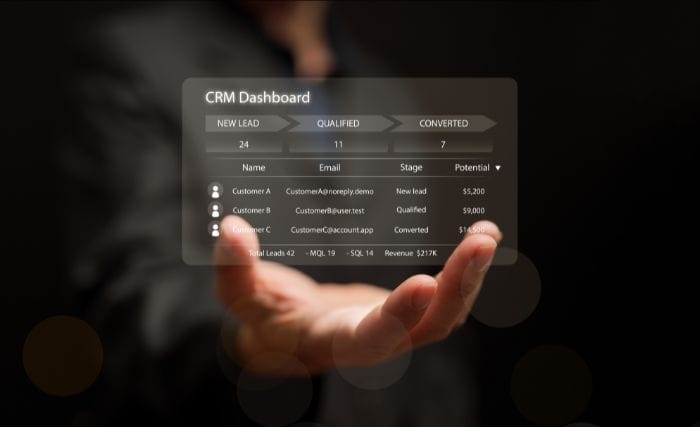
Is Your CRM Not Delivering ROI?
A CRM is often bought to solve exactly these problems, but it can easily become an expensive address book. If that sounds familiar to you, it’s probably because the processes weren’t put in place around them.
Before any CRM implementation or rebuild, define your lead stages, qualification criteria, ownership rules and response targets. Then configure the system to reflect them. The CRM then gives you a single, trusted view of where every lead sits and why.
Fixing the Gap Between Sales and Marketing
Buyers still value the right human input. We know that sales reps remain the most important information source when buyers identify a preferred supplier. That makes the handover worth getting right.
Based on my experience, there are four key steps:
- Agree one definition of a qualified lead, in writing, signed off by both teams.
- Set a service level agreement (SLA): a simple commitment on how quickly sales follows up and what marketing provides with each lead.
- Review rejected leads weekly. Each rejection is feedback for marketing.
- Report on one shared pipeline, from first enquiry to closed order, so both teams are measured on the same outcome.
In theory, none of this requires a large budget. What it needs is focus and someone with the authority to hold both teams to it. Where that authority is stretched, a structured review of your business processes and performance is often the quickest route to clarity.
Want to Turn Leads into a Real Pipeline?
I work with owners and leadership teams on an interim basis, through a few consultancy days each month, or on fixed-term projects. My B2B lead generation and pipeline management work brings marketing, sales and your CRM onto one agreed process, so the leads you already pay for have a fair chance of converting.
If your spend is not showing up in your pipeline, get in touch for an initial conversation.
FAQs
Why are my marketing leads not converting into sales?
The most common reason is a weak handover between marketing and sales. Leads are often passed on without an agreed definition of “qualified”, followed up too slowly or left without a clear owner. Fixing those usually improves conversion before any extra spend.
What is the difference between an MQL and an SQL?
An MQL (Marketing Qualified Lead) has shown interest, for example, by downloading content or attending a webinar. An SQL (Sales Qualified Lead) has a confirmed need, fit and timeframe that justify a sales conversation. Both teams should agree on the criteria that move a lead from one to the other.
How do I get my sales and marketing teams working together?
Start by giving them a shared definition, a shared pipeline report and a shared target. Add a simple service level agreement covering response times and lead information, then review rejected leads together every week. Common measures align teams more reliably than workshops.
Why is my CRM not delivering ROI?
Usually because the system was set up before the sales process was defined. Map the process first, then configure the CRM to support it.

Further Reading
- Lead Quality vs. Quantity: What Drives Growth?
- Understanding How B2B Buyers Actually Make Decisions
- Why Increasing Marketing Budget Doesn’t Always Improve Results
- Measuring Marketing Performance: How to Assess What Works