

Business strategy often looks robust on paper. Clear objectives, growth targets, investment plans and transformation roadmaps are carefully defined, but strategies can easily stall once they move from boardroom to day-to-day reality. Often, the strategy itself isn’t the issue; it can just as easily be a failure to recognise company culture as a core driver of execution.
This is why aligning business strategy with culture is so crucial. A company’s culture’s impact on business performance is one of the most decisive factors in whether strategy delivers results or unravels.
Why Business Strategy Fails Without Cultural Alignment
Business strategy sets direction, while company culture determines behaviour. When those two are misaligned, even the strongest strategy can struggle to gain traction.
Culture influences how decisions are made, how risk is viewed, how change is received, and how consistently people act in line with stated priorities. If a growth strategy demands collaboration, innovation or customer focus, but the existing culture rewards silos, risk avoidance or short-term fixes, execution will always fall short.
This is where many organisations encounter friction. Strategy is communicated as a set of goals, while culture continues to reward behaviours that might no longer serve those goals. The result is confusion, disengagement and inconsistency, all of which directly undermine business performance. Aligning business strategy with culture means ensuring that the behaviours required to deliver the strategy are clearly defined, reinforced and supported across the organisation.
Culture Is Not Necessarily a Soft Issue
Company culture is often described as intangible, but its effects are highly visible. Engagement levels, staff retention, leadership credibility and operational effectiveness all reflect cultural health.
Culture’s impact on business performance is particularly evident during periods of change. New strategies often require new ways of working. Without cultural readiness, change initiatives slow down, resistance grows, and momentum is lost.
Treating culture as a “soft” issue places it outside strategic decision-making. Treating it as a performance driver brings it into focus. The most effective organisations recognise that culture is not separate from business strategy, but is the mechanism through which strategy is delivered.
Purpose as the Foundation for Alignment
Purpose is vital in aligning business strategy with culture. When people understand why the organisation exists and how its strategy supports that purpose, they are more likely to act consistently and with intent.
A clear sense of purpose helps translate abstract strategic goals into meaningful action. It gives context to change and provides a reference point for decision-making at every level of the business. Without purpose, strategy risks becoming a set of disconnected initiatives rather than a coherent direction.
Purpose also strengthens engagement.
Employees who see how their work contributes to a wider goal are more likely to take ownership, collaborate effectively and commit to long-term objectives. This connection between purpose, culture and business strategy is central to sustained performance.
Employee Engagement and Strategic Delivery
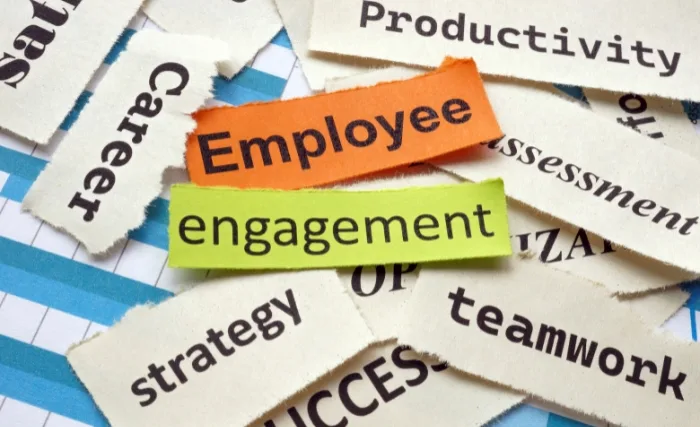
Employee engagement is one of the clearest indicators of whether company culture supports business strategy. Engaged employees are more productive, more adaptable and more invested in outcomes. Disengaged employees, by contrast, tend to focus narrowly on tasks rather than objectives.
Engagement improves when people feel informed, trusted and aligned with strategic priorities. This hinges on consistent leadership behaviour, clarity of expectations and meaningful communication.
Culture’s impact on business performance becomes particularly apparent when engagement drops. Strategies that rely on innovation, customer experience, or operational excellence cannot succeed without discretionary effort. Aligning business strategy with culture ensures that engagement is built into execution, rather than treated as a separate concern.
How Business Leadership Influences Cultural Alignment
Leadership behaviour shapes company culture more than any policy or framework. What leaders prioritise, tolerate, and reward sends powerful signals about what truly matters.
For a business strategy to succeed, leaders need to model the behaviours that the strategy requires. This includes how decisions are made, how performance is measured and how people are held accountable. Inconsistent leadership behaviour quickly undermines cultural alignment.
Senior teams play a particularly important role in linking strategy and culture. When leaders communicate strategy clearly, reinforce it through actions and address cultural barriers openly, alignment becomes far more achievable. Without this consistency, strategy risks being perceived as aspirational rather than operational.
Communication as a Strategic Tool
Clear communication is essential for aligning business strategy with culture. Strategy cannot influence behaviour if people don’t have a clear and tangible understanding of it and how it applies to their roles.
Effective communication centres around ongoing dialogue, practical examples and feedback loops that help people interpret strategy in their daily work. When communication is fragmented or overly abstract, cultural alignment weakens.
Consistent messaging across leadership, management and internal channels helps embed strategy into everyday decision-making. This clarity reduces ambiguity, builds confidence and supports consistent behaviour across the organisation.

Looking for Support in Aligning Your Business Strategy and Culture?
Over my career, I have worked with numerous organisations to ensure business strategy is not only well defined but effectively delivered. With extensive experience across strategy, marketing, leadership and change, I can support your business in aligning strategy with culture in practical, measurable ways.
This includes helping leadership teams clarify strategic direction, identify cultural barriers to execution, strengthen engagement and embed behaviours that drive performance. Whether supporting as an interim leader, strategic advisor or non-executive, together we can focus on turning intent into action and ensuring culture enables, rather than hinders, success.
If your organisation is experiencing gaps between strategy and delivery, or facing cultural challenges during growth or change, then get in touch with me today for bespoke support.
FAQ
Why does company culture affect business strategy delivery?
Because culture shapes behaviour, strategy relies on people acting consistently in line with strategic goals.
Can culture really impact business performance?
Yes. Culture influences engagement, retention, decision-making and execution, all of which affect performance.
How do leaders align business strategy with culture?
By modelling required behaviours, communicating clearly and reinforcing strategic priorities through actions.
Is cultural change necessary for growth strategies?
Often, yes. Growth strategies frequently require new behaviours that existing cultures may not support.