

Establishing how AI is changing business strategy and consultancy is one of the most common conversations I see happening in boardrooms right now.
I rarely attend a business event meeting without someone raising it. And the numbers do reflect something real: stats show that 77% of UK consulting firms have now integrated AI into their systems or enabled employees to use AI models. Around the world, 88% of organisations report regular AI use in at least one business function.
So that means the question isn’t really whether AI is changing business strategy. It clearly is. The more salient question, and the one I think business leaders actually need answered, is where AI genuinely adds value in consultancy and strategic planning, and where it does not.
How is AI Changing Business Strategy?
Let’s start with what AI does well, because the case is a strong one in the right context.
Understanding how AI is changing business strategy and consultancy starts with what the various platforms are genuinely built for: processing large volumes of data quickly, identifying patterns, and surfacing insights that would take a human analyst days to compile.
Market sizing, competitor benchmarking, trend analysis, and customer segmentation are all areas where AI tools can greatly accelerate the groundwork. We’ve known for a few years now that AI performs best in low-risk, high-volume, pattern-based tasks where efficiency and precision matter more than context or nuance.
So when you are building a business case or preparing for a strategic planning session, having that analytical layer move faster is a genuine advantage.
I’ve seen AI tools become increasingly useful for drafting frameworks, outlining research, and accelerating the diagnostic phase of an engagement. Tasks that used to consume significant time can now be completed in a fraction of the time with the right tools applied thoughtfully.
Estimates show that roughly 40% of consulting tasks are automatable, freeing skilled professionals to focus on client strategy, problem-solving, and relationship-building. That is not a threat to good consultancy. Done properly, it is an opportunity to spend more time where the real value sits.
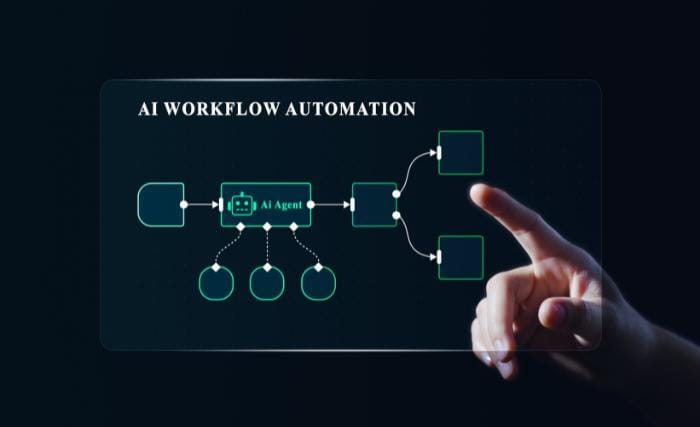
Want to See How AI Can Fit into Your Business Workflow?
If you’re looking for guidance on how AI can optimise your workflow or how to balance automation with human judgement, then I can help. I bring decades of business consultancy and strategy experience across sectors, delivering real results to companies across the UK. Get in touch to find out more.
Where AI in B2B Strategy Hits Its Limits
It’s important to be direct here, because there is a real risk of overclaiming what AI can do when it comes to using AI tools in B2B strategy and consulting.
Strategy is not a data problem.
It’s quite common that the organisations I work with have access to enough data. What they usually lack is clarity on what it means for their specific situation, the confidence to make a call, and the leadership alignment to act on it.
When people debate AI versus human judgement in business decision-making, this is exactly the distinction that gets lost. AI fundamentally cannot carry out tasks that require complex human-like cognitive functions, such as strategic planning, emotional intelligence, and nuanced problem-solving.
Leadership roles involve interpreting ambiguous information and navigating dynamic environments, and that is precisely where AI cannot adequately replace human judgement.
Research shows that AI cannot reliably distinguish good ideas from mediocre ones or guide long-term business strategies on its own. That finding should give pause to any business leader tempted to outsource their strategic thinking to a language model.
The deeper issue here is context.
An AI tool has no knowledge of your company culture, your stakeholder dynamics, the internal politics around a particular decision, or the commercial history that makes one approach viable and another a non-starter.
It does not know that your operations director will resist a change for reasons that will never appear in a data set or that your most important customer relationship hinges on factors that no model can quantify.
I say this with over 25 years’ experience working with businesses across manufacturing, food and beverage, engineering, infrastructure, and technology, from SMEs to global PLCs and PE-backed businesses undergoing transformation.
The strategic insight that matters in those situations comes from pattern recognition built through experience and empathy, not just access to information. Knowing which lever to pull, when to push back on a client’s assumptions, and when the strategy itself is sound but the execution approach is the problem; that is judgement, and it is not something AI currently replicates.

How to Think About Using AI Tools in B2B Strategy
In the simplest of terms, it’s crucial to think of AI as input, not an arbiter. It belongs upstream of decision-making handling research, analysis, and scenario exploration, not in place of it.
The businesses getting the most from AI are not the most aggressive adopters. They are the most deliberate ones, applying it to specific tasks where it genuinely accelerates output while keeping senior human judgement in the room for decisions that matter.
AI Versus Human Judgement in Business Decision-Making
As always, it’s really important to take a moment to approach problems from a client or customer perspective.
Clients are not paying for access to information. They can access information.
They are paying for commercial experience, sector knowledge, and the confidence that comes from having navigated similar challenges before. A well-prompted AI tool producing a polished strategy document is not the same as a strategy that will actually work in your business.
Activity is not the same as impact. That has always been true, and AI does not change it.
Need Support from an Experienced Business Consultant?
I work with business leaders, marketing directors, and strategy teams who need senior commercial experience, not just frameworks. Whether you’re navigating growth, undergoing transformation, or trying to build a strategy that will actually hold up in execution, I can help.
My services span Strategy & Business Growth, Marketing & Brand, Digital Strategy, B2B Lead Generation, CRM Implementation, Change Management, and Interim Commercial Director support across sectors including Food & Beverage, Engineering & Manufacturing, Technology, and PE-backed businesses.
Get in touch today to find out more about how I can help your business.
FAQs
Does AI make traditional business consultancy obsolete?
No. AI accelerates research and analysis, but it cannot replicate commercial experience, stakeholder judgement, or contextual decision-making. Good consultancy has always been about more than information, and that remains true.
How should I start using AI tools in B2B strategy and consulting?
Start narrow. Identify specific tasks (market research, data synthesis, scenario modelling) where AI can save time and apply it there first. Keep human judgement firmly in charge of interpretation, prioritisation, and any decision that carries real commercial risk.
When it comes to AI versus human judgement in business decision-making, where should the line be drawn?
Use AI for analysis, pattern recognition, and scenario exploration. Reserve human judgement for interpretation, stakeholder decisions, and anything with significant commercial consequence. The line sits between generating insight and being accountable for what you do with it.

Further Reading
Understanding How B2B Buyers Actually Make Decisions
Why Increasing Marketing Budget Doesn’t Always Improve Results
Lead Quality vs. Quantity: What Drives Growth?
The Right Resource Allocation for Business Growth