
Getting to grips with why B2B lead generation underperforms is one of the more consistent conversations I have with business owners and marketing leaders.
The instinct, quite often, is to do more: more campaigns, more content, more cold outreach. In my experience, that instinct isn’t necessarily the right approach, though.
Usually, the pipeline isn’t empty because of a volume problem. It’s stalling because there is a gap between how businesses market and how their customers actually research and buy.
Close that gap, and you’ll likely find that things start to work. Leave it open, and no amount of activity will fully compensate.
Why B2B Lead Generation Underperforms
They point to frustration, misalignment, and rising short-term pressure. That’s a striking admission, but not really a surprising one. Most B2B lead generation is built around the seller’s process, not the buyer’s.
The structural failure I see most often is this: marketing is measured on lead volume, sales is measured on closed revenue, and neither team shares a clear definition of what a qualified lead actually looks like.
Without a documented, jointly owned definition of what constitutes a sales-ready lead, each handoff becomes a negotiation, and trust erodes with each rejected lead. When sales stop trusting marketing-sourced pipelines, they stop working it, and the problem compounds quietly into a commercial crisis.
Understanding how B2B buyers actually make decisions exposes a second issue: timing.
Nearly two-thirds of B2B leads take at least three months to decide. A fifth of them wait over a year before purchasing. If you’re expecting a short cycle, returns will consistently underperform. That’s not really because the leads are poor, but because the nurture infrastructure to support a long decision cycle simply does not exist.

Is Your B2B Pipeline Not Performing the Way it Should?
With decades of industry experience, help business owners, sales directors, and marketing leaders find where the real problem sits and fix it. Find out more about my lead generation and B2B marketing services, or get in touch for clear, honest guidance.
How Do B2B Buyers Make Decisions?
90% of B2B buyers conduct research before ever speaking with a vendor, and more than half say they do extensive research.
By the time your team hears from a prospect, preferences are already forming and shortlists are already taking shape. 95% of the time, the winning vendor is already on the buyer’s initial shortlist. If you are not on that list, no amount of sales skill downstream will put you back in contention.
Understanding how B2B buyers actually make decisions also means grasping the committee reality.
These days, the average B2B purchase involves 13 internal stakeholders and 9 external participants, with 80% of decision-making happening before a seller enters the room.
Each stakeholder brings different priorities and different risk tolerances and asks different questions. Marketing that speaks only to the most senior decision-maker leaves the rest of the group underserved and the sale exposed.
The B2B buying journey begins with a search, conducted by buyers who will never announce themselves until they have already formed a preference. That’s where visibility and credibility are established or lost. And it is a phase most B2B marketing programmes are simply not designed to serve.
Why Your Sales Pipeline Isn’t Filling Up
When the pipeline dries up, I often see the conversation turn to sales performance. In my experience, that is rarely where the root cause sits.
Why your sales pipeline is not filling up is more often a marketing and alignment problem.
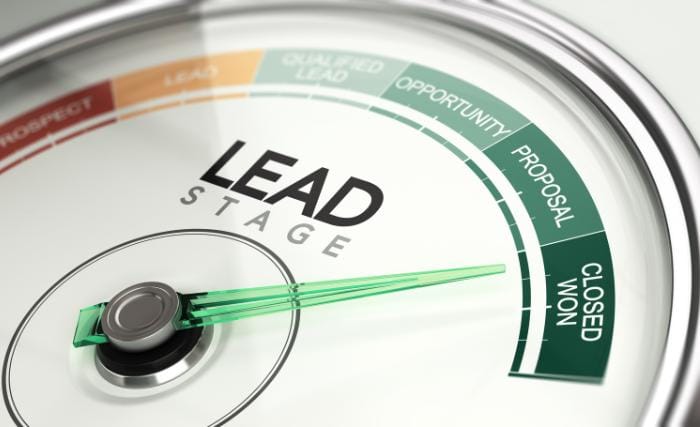
Adding more leads to a broken funnel will not increase revenue. Before any campaign investment, audit where leads stall: MQL to SQL, SQL to Opportunity, Opportunity to Revenue.
That tells you whether the problem is targeting, messaging, handoff, or nurture. Without that diagnostic, you are guessing and spending accordingly.
The second reason pipelines fail to fill is content built for conversion rather than for the research phase. If your content library is weighted towards bottom-of-funnel calls to action and product messaging, you are invisible to buyers at the stage where their preferences are actually forming.
That is where the decision is being made, long before anyone contacts you.
Aligning Marketing With the B2B Buying Process
Aligning marketing with the B2B buying process is really the action that fixes a lot of what I’ve described here. It’s consistently underestimated as a commercial lever.
In practice, it starts with a tightly defined ideal customer profile that captures buying triggers, decision-making structure and the pain points that create urgency.
It continues with agreed definitions of a qualified lead that both marketing and sales own.
And it requires content and channel strategy mapped to how B2B buyers actually make decisions, not to the stages that are easiest to measure internally.
Over three-quarters of B2B buyers read user reviews, and more than half speak directly with current users before purchasing.
Peer validation is at the absolute epicentre of aligning marketing with the B2B buying process. Buyers use it to reduce risk and build confidence long before any sales interaction occurs. If your marketing programme is not systematically generating and amplifying that evidence, you are missing one of the most influential stages of the buying journey.
Why B2B lead generation underperforms, in most cases, comes back to the same root cause: the gap between how businesses push out their message and how buyers pull in information to make decisions.
Want to Align Your Marketing with B2B Buying Practices?
I work with business owners, sales directors, and marketing leaders who need a clearer line between commercial activity and commercial results.
If your B2B lead generation is underperforming, your sales pipeline is not filling up, or your marketing and sales teams are working from different playbooks, I can help.
My work spans B2B Lead Generation and Pipeline Management, Marketing Strategy, Digital Strategy, and more, across a range of different sectors.
If you want to understand why your pipeline is not performing and build something that actually works, get in touch today.
FAQ
Why does B2B lead generation underperform even when budgets are healthy?
Budget is rarely the constraint. The more common issue is that lead generation is built around seller convenience rather than buyer behaviour: wrong timing, wrong content, wrong definition of a qualified lead. More spend amplifies the problem rather than solving it.
How do B2B buyers actually make purchasing decisions today?
Most research happens long before any vendor contact. Buyers use search, peer reviews, and AI tools to shortlist options early and quietly. By the time they engage, preferences are largely formed. Your marketing needs to be active in that silent research phase, not just at the point of enquiry.
How do I start aligning marketing with the B2B buying process?
Begin with an audit of where leads stall in your funnel, then agree a shared definition of a qualified lead between sales and marketing. From there, map your content and channels to how your buyers actually research, not to the stages of your internal sales process.

Further Reading
Why Increasing Marketing Budget Doesn’t Always Improve Results
Lead Quality vs. Quantity: What Drives Growth?
The Right Resource Allocation for Business Growth
How to Reduce Business Costs Without Reducing Quality